
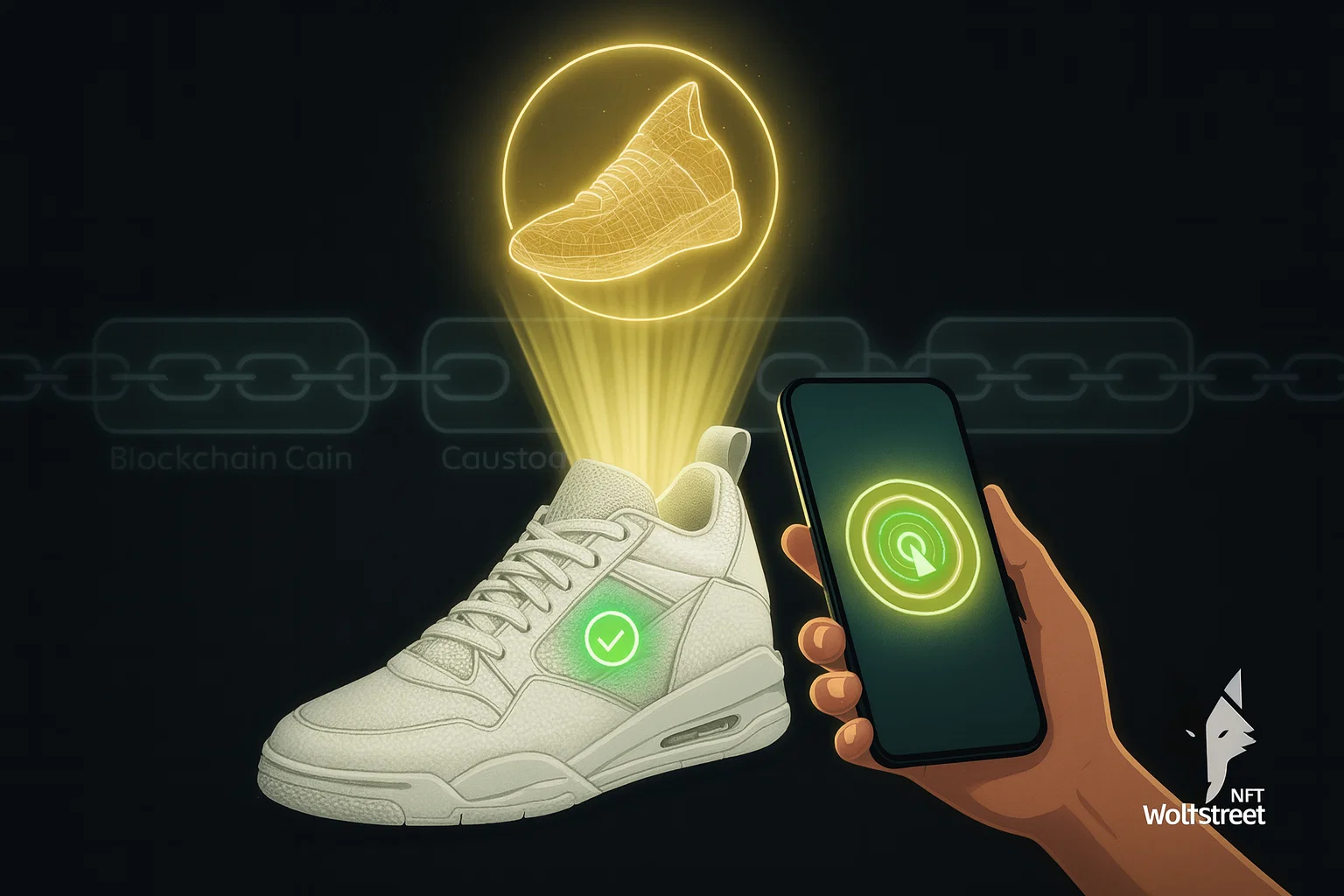
The NFT market is evolving from selling JPEGs of monkeys to selling authentication for physical luxury goods. This convergence of the physical and digital worlds is often termed “Phygital” (physical + digital). By embedding Near Field Communication (NFC) chips into physical items like sneakers, watches, hoodies, or fine wine, and linking those chips to an NFT on the blockchain, brands are creating a new layer of utility and value that solves the multi-billion dollar problem of counterfeiting.
The Scan-to-Own Experience
Imagine buying a limited-edition pair of sneakers. Embedded in the tongue is a tiny NFC chip. When you tap your phone to the chip, it verifies that the sneakers are authentic and allows you to “claim” the corresponding NFT into your digital wallet. Now, you own the sneakers in real life and the digital version in the metaverse. If you decide to sell the sneakers later, the buyer can scan the chip to confirm they are real. You then transfer the NFT to their wallet, proving the transfer of ownership. This creates an unbreakable chain of custody for physical goods.
Solving the Counterfeit Crisis
For the luxury fashion and collectibles market, this is revolutionary. Counterfeiting destroys brand value. With Phygital technology, a knock-off bag might look identical, but if it doesn’t scan and link to a valid NFT on the blockchain, it is worthless. Brands like RTFKT (owned by Nike) and Azuki have pioneered this “Physical Backed Token” (PBT) standard. It decouples the authentication from a central database; even if the brand goes out of business, the blockchain record remains.
New Revenue Streams: Perpetual Royalties
For creators and brands, Phygital goods open up the possibility of secondary market royalties. Currently, if Nike sells a shoe, they make money once. If that shoe is resold on StockX for $5,000, Nike makes $0. With Phygital goods, smart contracts could theoretically enforce a royalty fee whenever the digital ownership token is transferred, allowing brands to capture value from the secondary market economy.
From Collecting to Investing
This trend bridges the gap between traditional collecting (watches, art, wine) and crypto investing. It brings tangible value to the NFT market, making it less speculative and more grounded in real-world demand. It requires investors to perform Fundamental Analysis not just on the token, but on the quality and desirability of the physical item backing it. As this market grows, we will need trading infrastructure that can handle these hybrid assets.
Platforms like the YWO trading platform are watching this space closely, preparing for a future where trading a Rolex and trading Bitcoin happens on the same interface, connected by the cryptographic truth of the blockchain.

I am Normand Burgos, a content creator who specializes on blockchain technology. I am 44 years old and have been married for 10 years to my beautiful wife and we have two kids, a boy and a girl.
I love spending time with my family and friends, going out to eat, watching movies, playing video games, and of course learning about new technologies. I have worked in various industries throughout my career but find myself most passionate about blockchain technology because of its potential to change the world as we know it.